

lalibella
Lalibela is a town in northern Ethiopia known for its remarkable rock-hewn churches. These churches are a UNESCO World Heritage site and are considered one of the country’s most important historical and religious landmarks. The 11 medieval churches in Lalibela were carved out of solid rock in the 12th century and are a testament to the architectural and engineering prowess of the time. The churches were commissioned by King Lalibela, who wanted to create a “New Jerusalem” for Christians in Ethiopia. The intricate and unique design of the churches, including their monolithic structures and finely carved details, makes Lalibela a significant pilgrimage site for the Ethiopian Orthodox Tewahedo Church. Each church has its own distinct architectural style and features, with some carved into the ground, while others are free-standing. The most famous among them is St. George’s Church, known for its cross-shaped design and intricate carvings.
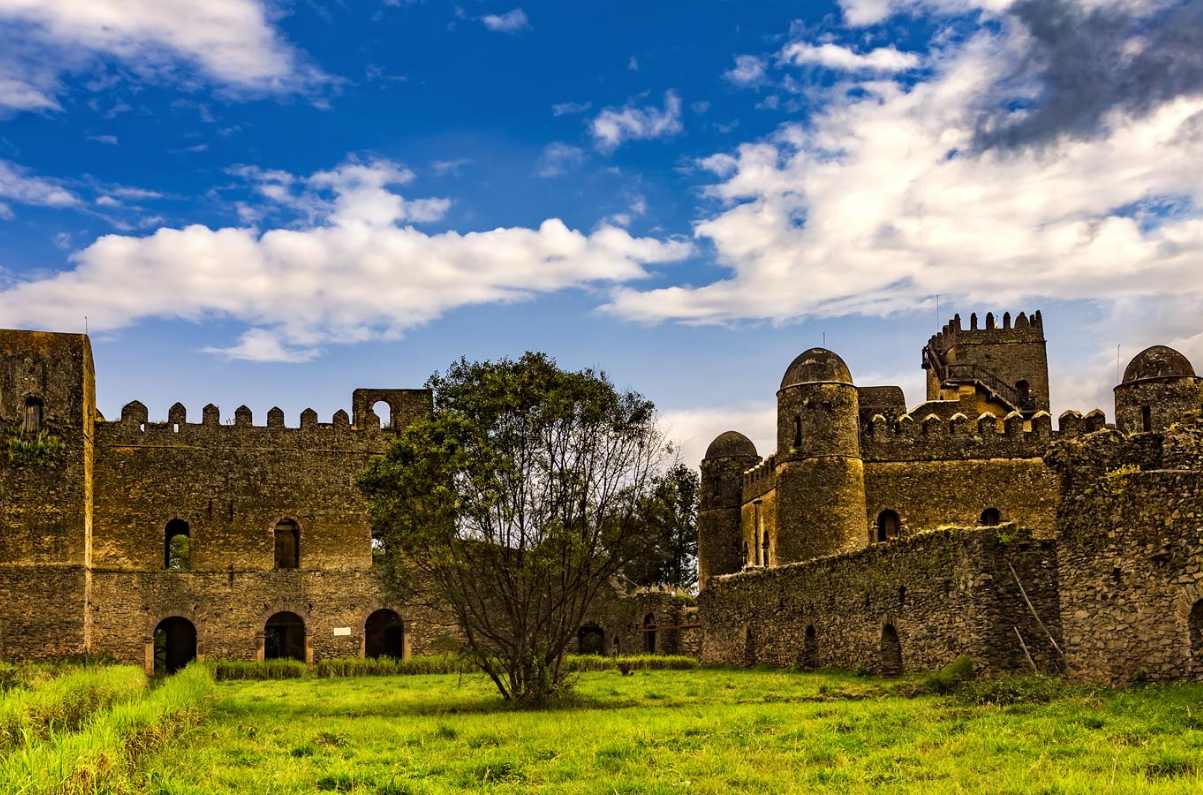
Gondar
Gondar is a city in northern Ethiopia known for its rich historical and cultural heritage. It served as the capital of the Ethiopian Empire during the 17th and 18th centuries, and it’s famous for its well-preserved medieval castles and churches. Gondar is also a UNESCO World Heritage site, recognized for its unique architecture and historical significance.
The Royal Enclosure in Gondar is a major attraction, featuring a collection of castles, palaces, and other structures built by various emperors. These buildings showcase a blend of Ethiopian, European, and Islamic architectural influences. The city is often referred to as the “Camelot of Africa” due to its impressive castle complex.

Axum
Axum (also spelled Aksum) is an ancient city in northern Ethiopia with a rich history and cultural significance. It was the capital of the Aksumite Empire, which thrived from the 4th to the 7th century AD. Axum is recognized as a UNESCO World Heritage site due to its archaeological sites, which provide insights into the early history of Ethiopia.
Key features of Axum include the obelisks, large monolithic stone pillars that were carved to commemorate rulers and nobility. The most famous obelisks are the Obelisk of Axum and the Great Stele, although some were taken to Italy in the 20th century and later returned to Ethiopia. Axum is also associated with Ethiopian Orthodox Christianity. The Church of St. Mary of Zion, located in Axum, is believed to house the Ark of the Covenant, a significant religious artifact in Ethiopian tradition.

Harar
Harar is an ancient city in eastern Ethiopia, recognized for its historical, cultural, and religious significance. It is one of the country’s oldest cities and is known for its well-preserved old town, which is a UNESCO World Heritage site. Harar has been an important center for Islamic culture and learning for centuries. Harar’s old town is characterized by narrow, winding alleys lined with colorful houses and traditional buildings. The city’s unique architecture reflects a blend of influences, including Islamic and Ethiopian styles. The old town of Harar, known as Harar Jugol, is surrounded by ancient walls and gates. It is home to numerous mosques, shrines, and over 80 mosques, making it one of the most densely populated Islamic cities in the world. Harar is famous for a unique tradition where locals feed hyenas every night outside the city walls. This practice is believed to have originated as a way to protect the city from these predators. Visitors can witness this spectacle, where hyenas are fed by hand. Harar has a rich cultural heritage, with a strong emphasis on literature, poetry, and Islamic scholarship. The city has produced many renowned poets, scholars, and historians.

Omo Valley
The Omo Valley is a region in southwestern Ethiopia known for its cultural diversity and the presence of various indigenous tribes. It is recognized for its rich anthropological significance, and many of the ethnic groups residing in the Omo Valley maintain traditional customs and lifestyles. The Omo Valley is home to numerous ethnic groups, each with its own distinct language, customs, and traditions. Some of the well-known tribes in the region include the Hamar, Karo, Mursi, Dasanech, and Arbore, among others. The tribes of the Omo Valley are known for their unique cultural practices, including body painting, scarification, and intricate hairstyles. These practices are often significant elements of rites of passage, ceremonies, and social identification within the communities. The villages in the Omo Valley typically consist of traditional thatched huts and are situated along the Omo River. Visiting these villages provides a glimpse into the daily lives and customs of the indigenous tribes. The Omo Valley is adjacent to Omo National Park, a protected area known for its diverse wildlife, including elephants, buffalo, and various species of birds. The park adds natural beauty to the cultural richness of the region.

National Parks
- The Simien Mountains National Park is a UNESCO World Heritage site located in the northern part of Ethiopia. It is renowned for its stunning landscapes, deep valleys, and rugged mountain terrain. The park is characterized by high plateaus, sharp cliffs, and deep canyons, creating a dramatic and visually striking environment with high peaks, diverse range of wildlife, hiking & trekking, cultural heritage.
- The Bale Mountains National Park is a protected area located in the southeast of Ethiopia. It is known for its diverse ecosystems, rich biodiversity, and unique landscapes. The park encompasses a range of habitats, from Harenna Forest, the largest cloud forest in the country, to Afro-alpine meadows and grasslands at higher elevations.
- Awash National Park is a protected area located in the northeastern part of Ethiopia, along the Awash River. Established in 1966, the park covers a diverse range of landscapes, including savannah, acacia woodlands, and the spectacular Awash Gorge. It is one of the oldest and most visited national parks in Ethiopia, known for its wildlife, natural beauty, and cultural significance

Danakil Depression
The Danakil Depression is a geological depression in the Horn of Africa, located in the northeastern part of Ethiopia. It is known for its extreme and harsh conditions, making it one of the hottest and lowest places on Earth. Here are some key points about the Danakil Depression. The Danakil Depression is situated in the Afar Triangle, at the junction of the African, Arabian, and Somali tectonic plates. This region is known for its tectonic activity, including volcanic eruptions and seismic activity. The depression is characterized by extremely high temperatures, with daytime temperatures often exceeding 50 degrees Celsius (122 degrees Fahrenheit). It is one of the hottest places on Earth. The depression is also one of the lowest points on the African continent, with portions lying more than 100 meters (328 feet) below sea level. The area is geologically active, with numerous volcanic features, including craters, lava lakes, and hot springs. One of the most notable volcanoes in the region is Erta Ale, which has a continuously active lava lake. The Danakil Depression is home to vast salt flats, including the famous Afar salt flats, where traditional salt mining has been practiced for centuries. The local Afar people extract salt by cutting it into slabs and transporting it by camel caravans.
ETHIOPIAImportant dates to remember
Ethiopian Christmas - January 7
Ethiopian Christmas, celebrated on January 7th, is the Ethiopian Orthodox Christmas, which follows the Ethiopian Calendar. This joyous holiday commemorates the birth of Jesus Christ with solemn church services, prayers, and colorful processions.
Epiphany (Timket)- January - 19
Timkat, celebrated on January 19th, marks the Ethiopian Orthodox Epiphany and the baptism of Jesus Christ in the Jordan River. This vibrant holiday is characterized by colorful processions, hymn singing, and the ceremonial reenactment of baptismal rites.
Ethiopian New Year (Enkutatash) Sep 11
Enkutatash, meaning “gift of jewels” in Amharic, heralds the Ethiopian New Year, celebrated on September 11th with great fervor and merriment, Enkutatash marks the end of the rainy season and the beginning of the sunny months, symbolizing renewal and fresh beginnings.
Ready to explore Ethiopia
We are ready to fulfil your travel dreams
Top ItemsOur Top Packages
10 Days
Phasellus ac purus et sem scelerisque semper. Vivamus semper tristique risus.
4 Days
Phasellus ac purus et sem scelerisque semper. Vivamus semper tristique risus.
7 Days
Phasellus ac purus et sem scelerisque semper. Vivamus semper tristique risus.